
How Lottery App Design Influences Ticket Purchase Frequency in 2026
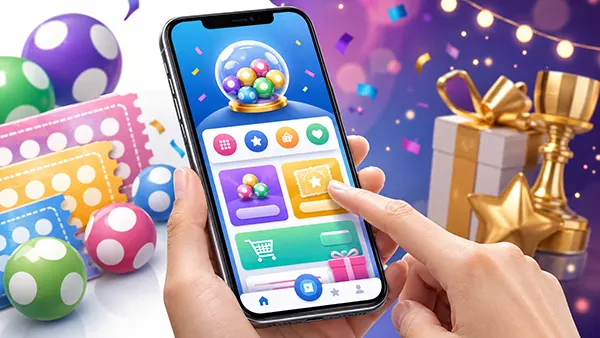
A lottery app does more than transfer the familiar ticket-buying process to a smartphone. Its layout, navigation, payment flow, reminders and account tools determine how quickly a person can move from thinking about a draw to completing a purchase. By 2026, major lottery apps have made common actions such as saving numbers, checking results, managing funds and entering another draw possible within a few taps. These improvements reduce practical barriers, but they also raise an important behavioural question: when buying becomes easier, does it encourage people to purchase tickets more often? Research suggests that convenience, timing, visual presentation and habit can all influence purchasing decisions, although app design is only one part of the picture. Ticket price, jackpot size, draw schedules, disposable income and personal attitudes towards lotteries still matter. The influence of design is therefore best understood as a combination of small changes that make returning, deciding and paying either easier or more difficult.
Convenience Can Turn Occasional Interest into Repeat Ticket Purchases
The most direct way app design can affect purchase frequency is by reducing the effort required to buy a ticket. A person buying from a physical retailer has to travel to the shop, remember the draw deadline and complete the transaction before sales close. A mobile app removes most of those steps. Once an account has been created and payment details have been arranged, a ticket can often be purchased wherever the operator permits mobile play. This does not automatically make someone interested in buying more tickets, but it removes practical reasons for postponing a purchase. An occasional buyer who previously missed a draw because there was no convenient retailer nearby may be able to participate immediately instead. When the same low-effort process is available for every draw, purchasing can gradually become part of a regular routine rather than an occasional activity that requires advance planning.
Features that remember previous choices can reduce effort further. The current UK National Lottery app, for example, allows users to save selected numbers and use biometric sign-in on supported devices. Such functions shorten repeated tasks that otherwise have to be completed each time a person returns. Saving favourite numbers is particularly relevant to traditional draw games because many regular lottery players prefer to use the same combinations over long periods. Instead of choosing six numbers again or searching for an old ticket, the player can retrieve a stored selection and move towards checkout quickly. The convenience is small when considered as a single transaction, but its effect can accumulate over dozens of visits. A buying process that takes less time and demands less attention is easier to repeat, particularly when users already intend to participate in several weekly or monthly draws.
Payment design also matters because the checkout stage is where an intended purchase can still be abandoned. Confusing balance information, repeated authentication, unexpected errors or unclear payment buttons create friction. A simple payment screen with an obvious total, identifiable payment method and clear confirmation makes the transaction easier to understand. The UK National Lottery’s major digital upgrade in January 2026 included a new payment screen and changes intended to simplify activities including playing games, checking results and claiming prizes. These changes illustrate why lottery operators invest heavily in apparently ordinary parts of an app. The objective is not merely visual modernisation. If users encounter fewer practical obstacles between selecting an entry and confirming payment, a larger share of intended purchases can potentially be completed. Conversely, persistent payment or login difficulties can reduce purchase frequency even among people who already have a strong interest in lottery draws.
Why Fewer Steps Matter Most Near a Draw Deadline
Convenience becomes especially important as a draw approaches. Lottery buying is unusual because the value of the ticket itself does not improve simply because the sales deadline is closer, yet purchasing behaviour often becomes more concentrated before a draw. Research published in Marketing Letters in 2025 used actual lottery sales data and found that willingness to purchase increased as draw day approached. Follow-up experiments indicated that temporal proximity, visualisation and perceived likelihood were connected with purchase intention. For an app designer, this means that presenting the next draw and its closing time clearly can affect when people act on an intention they already have. If a user opens an app a few hours before sales close and immediately sees the relevant draw, ticket price and entry button, there is little administrative effort between remembering the lottery and completing the transaction.
The same principle helps explain why home-screen organisation can influence repeat use. If the app presents upcoming draws in a predictable order, returning users do not have to search through several menus every time. A person who normally buys a ticket for a Wednesday draw can recognise the relevant section immediately, while someone interested only in a weekly game can ignore unrelated products. Good design therefore reduces what might be called decision effort without trying to change the player’s underlying preference. It is also important not to confuse convenience with persuasion. A clear route to a game helps someone carry out an intended purchase; excessive countdowns, repeated prompts or visually dominant calls to purchase can place additional pressure on that decision. The distinction matters because lottery products involve real money, and reducing unnecessary friction should not mean removing opportunities for the user to reconsider spending.
Speed is useful only when the process remains understandable. A one-tap purchase may sound convenient, but lottery transactions benefit from a confirmation stage that shows what is being bought, how much it costs and which draw the entry covers. This is particularly important where a user can select several lines, several draws or recurring participation. The best approach is therefore not to eliminate every step, but to eliminate steps that serve no useful purpose. A well-designed app can remember harmless preferences while keeping important financial information visible before payment. That balance can influence long-term frequency more than pure transaction speed. If purchasing is convenient and predictable, users have fewer reasons to abandon legitimate intended purchases. If it becomes so rapid that costs are easy to overlook, however, higher frequency may reflect impulsive behaviour rather than a genuinely better user experience.
Visual Hierarchy, Personalisation and Notifications Shape Return Behaviour
What a lottery app places on its first screen determines which information receives attention first. Draw games compete for limited space with results, account balances, promotions, instant games and responsible-play tools. Visual hierarchy is simply the way size, position, spacing and contrast tell users which elements matter most. A clearly organised home screen may show an upcoming draw, its closing time, ticket price and current jackpot while keeping secondary information less prominent. This helps users understand the available choices quickly. The effect on purchase frequency comes from repetition: if the relevant draw is consistently easy to locate, the effort required to return each week remains low. By contrast, a crowded interface can create uncertainty and slow down decisions. Users may leave without purchasing because they cannot immediately tell where to find their usual game or whether they are selecting a single entry, multiple entries or a different product.
Lottery design also has a strong visual component because large jackpot figures naturally attract attention. Designers can make jackpot values more noticeable through size and placement without changing the mathematical probability of winning. That distinction is important. A £20 million jackpot displayed prominently is still attached to exactly the same stated game rules and odds as the same jackpot shown in smaller text. Research into lottery purchasing has found that visualisation can influence perceived likelihood and purchase intention, which means visual presentation should be treated as more than decoration. Draw dates, ticket prices, odds and key conditions need sufficient visibility alongside prize amounts. When an app makes the reward highly prominent but leaves the cost or probability information difficult to locate, the interface can distort how a quick decision feels even if all required information technically exists somewhere in the account or game rules.
Personalisation can make the experience more efficient when it is based on straightforward user choices. Saved numbers, favourite games, previous entries and preferred result alerts reduce repeated searching. The current National Lottery app in the UK, for instance, supports saved numbers and paper-ticket scanning as well as account-based play. These functions serve different users but have the same practical effect: they give people a reason to return to the app for tasks connected with their existing lottery activity. Someone who scans a retail ticket to check the result may subsequently see the next scheduled draw, while an account user who checks a previous online entry is already close to the purchase area. This does not prove that every result check produces another purchase. It does show why combining results, account management and ticket purchasing in one mobile experience creates more opportunities for users to move between checking past activity and considering a future entry.
The Difference Between Useful Reminders and Behavioural Pressure
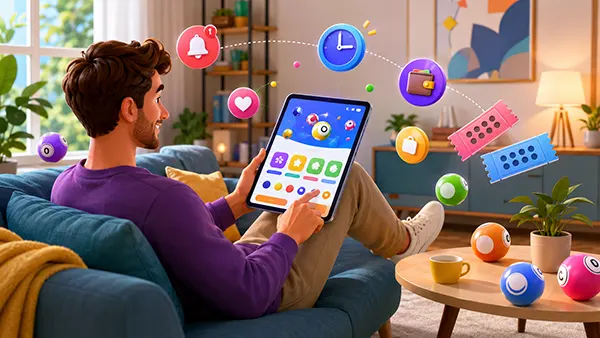
Push notifications are one of the clearest ways an app can influence return frequency because they reach the user without requiring the app to be opened first. The current UK National Lottery app states that users who permit push notifications can receive marketing messages and can switch those notifications off through device settings. A message about a result, an upcoming draw or another relevant account event can function as a practical reminder. For someone who already buys a ticket on Fridays but occasionally forgets, a timely notification may be enough to bring the intended purchase forward. The effect is different from a static home screen because the prompt appears in the user’s normal phone activity. Notification design research outside lotteries also shows that presentation can influence whether people accept, dismiss or ignore alerts, reinforcing the idea that message timing and appearance are meaningful parts of mobile behaviour rather than neutral technical details.
Frequency becomes a responsible-design issue when reminders shift from useful information to repeated pressure. A notification stating that a draw closes at a specific time provides factual information. A sequence of urgent messages repeatedly focusing on large prizes, missed opportunities or personalised encouragement can create a much stronger behavioural prompt. The difference is especially relevant for lottery products because urgency is built into the draw schedule: there really is a closing time. Designers therefore do not need to manufacture additional pressure for the deadline to be relevant. Sensible notification controls allow users to decide which categories they want and to turn marketing off without affecting necessary account messages. Frequency settings can also prevent the phone from becoming a continuous advertising channel. In practical terms, a smaller number of useful alerts may support deliberate purchasing more effectively than constant notifications that users eventually mute or begin to ignore.
Personalisation requires similar restraint. An app can legitimately remember that a user usually plays one particular draw or prefers certain numbers, but behavioural data can also be used to time messages around previous purchasing patterns. The more precisely a reminder arrives when a user is likely to buy, the more capable it becomes of influencing frequency. Research into deceptive and manipulative design in online gambling has increased in recent years, and researchers have warned that the behavioural effects of individual interface features are still not fully understood. That limitation is important when discussing lotteries. There is not enough evidence to assign a precise increase in ticket purchases to a particular button colour, notification or layout. What can be said with greater confidence is that visibility, timing, convenience and reminders affect user engagement, while lottery-specific research shows that timing and visualisation can alter purchase intention. Claims beyond that need evidence from actual player behaviour rather than assumptions.
Trust, Payment Design and Safety Controls Affect Long-Term Purchase Frequency
An app can be easy to use and still lose repeat customers if it does not feel reliable. Lottery purchases involve money, personal details and the expectation that a valid entry will be recorded correctly before the draw. Users therefore need immediate confirmation that payment succeeded, a visible record of purchased entries and straightforward access to results and prize information. Small uncertainties can matter. If a payment screen appears to freeze, an entry disappears from purchase history or a user cannot tell whether funds have been deducted, the natural response may be to avoid another transaction until the issue is resolved. Reliability influences purchase frequency indirectly by determining whether the buyer trusts the process enough to repeat it. This is one reason why technical upgrades to established lottery services can have behavioural consequences even when no game rules change: improvements or disruptions in everyday account use can alter how comfortable regular players feel about returning.
Trust is also strengthened when financial information is shown before rather than after a decision. The price of one line may appear inexpensive in isolation, but several lines across several weekly draws can create a much larger monthly total. An app can help users understand this by showing the complete transaction value, account balance, current limits and recent activity in accessible locations. These elements do not prevent people from buying tickets; they make the cost harder to overlook. This is particularly relevant to recurring purchases, which can continue with less active decision-making than a one-off entry. Clear controls for reviewing, changing or stopping repeat participation help ensure that frequency reflects an ongoing choice. A design that makes starting a repeated purchase simple while hiding cancellation behind several menus creates an imbalance between spending and stopping, which is difficult to justify in a product where consumer protection should remain part of normal account design.
The relationship between trust and convenience became especially visible in the UK during the 2026 National Lottery technology changes. Allwyn said its January upgrade moved 11.8 million active registered players to a new account-management system and introduced a refreshed design, a new payment screen and simpler processes for several common activities. Changes of that scale can improve long-term usability, but any major migration also demonstrates how dependent regular purchasing has become on account access and payment reliability. A retailer ticket can still be bought when a phone is unavailable, whereas an online customer depends on successful login, account verification and transaction processing. Consequently, app quality can influence not only whether a customer chooses mobile purchasing in the first place but also whether mobile play remains a regular habit. For operators, dependable everyday functionality can be more important to sustained use than adding decorative effects or constantly changing the appearance of familiar screens.
Responsible Design Can Add Useful Friction Without Making Buying Difficult
Some friction is valuable when money is involved. In 2026, the UK National Lottery introduced additional player-protection measures alongside its digital changes. Allwyn stated that new customers would have to set personal deposit and spending limits. For instant-game players, the changes also included automatic logout after 60 minutes followed by a 10-minute cooling-off period and reality checks every 20 minutes. These measures should not all be treated as controls on ordinary draw-ticket purchasing because some specifically concern faster instant games, but they demonstrate an important design principle. An app can make routine navigation convenient while deliberately slowing situations where continuous play deserves more attention. The aim is not to make every purchase cumbersome. It is to put friction at points where a pause, spending decision or review of activity can help the user make a more deliberate choice.
Limits can also change how frequently people buy without relying on intrusive warnings. A clearly visible spending limit establishes a boundary before the next purchase appears. Transaction history provides context after previous purchases. Reality checks interrupt continuous activity and bring attention back to time spent. These tools work differently, yet each adds information that an extremely streamlined buying journey might otherwise remove from view. Research on harm-minimisation features in mobile gambling suggests that different kinds of controls may support different users rather than producing one universal effect. Lottery apps should therefore avoid treating responsible design as a single button hidden in an account menu. Practical controls are more useful when people can find them easily, understand what they do and change appropriate settings without navigating through confusing screens. Safety features are part of user experience, not an obstacle placed outside it.
Lottery app design ultimately influences ticket purchase frequency through several connected mechanisms rather than one persuasive feature. Easy login, saved selections and clear payment steps reduce the effort involved in repeating an intended purchase. Draw visibility and reminders can bring a future purchase to mind at the moment when it is relevant. Visual presentation can affect attention, while reliable account records and transparent costs support trust. At the same time, spending limits, notification controls and carefully placed pauses can prevent convenience from becoming uncontrolled repetition. None of these elements determines behaviour alone. Jackpot size, draw timing, ticket price, habit, income and individual motivation remain important. The strongest assessment in 2026 is therefore not that better-looking lottery apps simply make people buy more tickets, but that design changes the conditions under which decisions are made. It can make purchasing easier and more frequent, or it can help keep repeated play visible, deliberate and manageable.